EN
EN



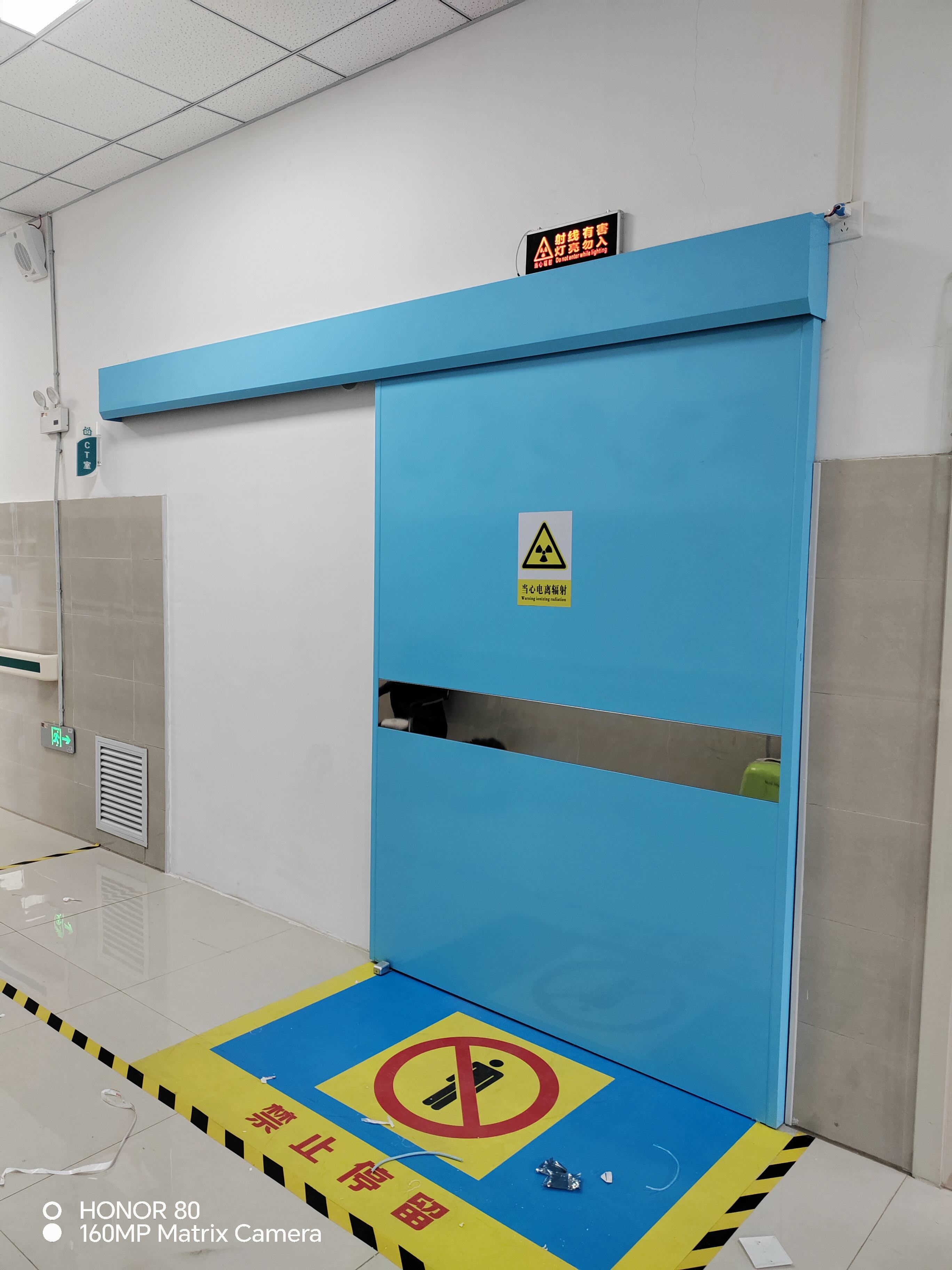
When the environment calls for absolute protection from harmful radiation, no less than each structural element should perform accurately and consistently. The forbiddance with lead lining is, among all the shielding components, one of the most substantial safety barriers that guarantee the safety of medical imaging rooms, industrial nondestructive testing facilities, laboratories, and research institutes. Nevertheless, by what means are these specific doors able to limit radiation so efficiently and why are they the first ones to be considered when safety-critical areas of the modern world have to be pointed out?
A lead-lined door acts like a multilayered defense system in both its conception and actual operation. As a result, Liaocheng manufacturers Fuxunlai took a great deal of time and put a lot of effort into perfecting the strength, the shield's effectiveness, and the door's wear resistance so that it could endure harsh conditions and still be simple to use. To understand their value, one has to go deeper into the science, the skill, and the practical side of their production.
The Science Behind Lead as the Ultimate Shielding Material
Lead is the densest of the metals and the best one to absorb and disperse the high-energy particles like X-rays and gamma rays. So a good quality lead-lined door comprises the lead sheet of the precisely defined lead thickness - generally, the thickness varies from 1 mm to over 3 mm depending on what level of protection is required. The dense material thus traps radiation in the area designed for it and avoids leaks that could harm operators, patients, or workers in the neighboring rooms.
A shielding door is not like a simple barrier, it has to be airtight all around. There can never be even the tiniest space between the edges of the door because that would render the whole shielding system useless. That is the reason great care in the engineering of the product and in the installation is essential if one wants to be absolutely sure of radiation protection.
Engineering Structure: More Than Just a Door with Lead
An expert lead-lined door is made up of multiple technical layers:
- Core Shielding Layer The lead sheets are tightly fitted into the door’s middle part, thus, there are no irregularities or weak spots.
- Reinforced Metal Frame The frame not only has to bear the heavy load of the lead but also has to be resistant to the wear and tear it will get over time.
- Shielded Seam Design The radiation cannot escape from the joints that connect the door with the frame, because the edges here carefully overlap and interlock with each other.
- Specialized Hardware The parts by which the door attaches to the wall, the handle, and the latch are usually strengthened or may be specially manufactured to take the extra weight of the door and maintain the sealing.
Liaocheng Fuxunlai and other producers of the lead-lined doors engineered their products to correspond to safety standards in the medical and industrial sectors worldwide. They will work reliably even in environments with frequent operations. Apart from the capability of shielding, their engineering emphasis is also put on the door stability during operation and its long service life.
Applications Where Lead Lined Doors Are Essential
Medical Imaging Centers
Computed tomography scanners, radiography rooms, fluoroscopy units, and linear accelerators are all sources of ionizing radiation. Correctly constructed lead-lined doors block radiation from spreading to areas other than the treatment or diagnostic ones, thus, medical staff and patients are not exposed to the risk.
Industrial Testing Facilities
Among the industries which the nondestructive testing is the most powerful one, are aerospace, automotive manufacturing, and metal fabrication. They utilize such powerful X-ray equipment, thus, must rely on the use of shielding doors for the protection of operators and workers in the close vicinity.
Pharmaceutical and Scientific Laboratories
Research with radioisotopes requires that the areas be very tightly sealed and carefully regulated. This kind of work can be carried out in lead-lined doors under strict health and safety regulations.
Nuclear-Related Operations
In the case of segments or sectors that handle radioactive materials, doors that have high shielding capacities are the ones that keep the contamination away and ensure safe operation for a long time.
Where radiation is concerned, door systems should be able to provide total shielding protection and at the same time, not interfere with the work process or the ergonomics of the room.
Why Reliability Depends on Professional Craftsmanship
The degree to which a lead lining in a door is capable of shielding is limited by the level of quality in the making of the door. This, in turn, makes the production of the door a very important determinant. In the global market Liaocheng Fuxunlai have established a good name by their consistent combination of top-quality raw materials, state-of-the-art manufacturing methods, and rigorous quality control. Their products are verified for:
- Shielding continuity
- Frame and leaf alignment
- Long-term load resistance
- Smooth opening and closing
- Edge sealing precision
Such strict production specifications make for a product that can be used for years at hospital or industrial centers with a high-duty cycle without failing.
Balancing Safety and User Convenience
Nowadays lead-lined doors are designed to provide heavy protection, yet they are user-friendly. Kept in view of the customer's desires, the doors may be:
- Manually operated swing doors suitable for limited spaces
- Automatically sliding doors for medical departments with a high influx of people
- Extra-large industrial doors for easy access to big machinery
Though they are heavy, the correct mechanical design will be such that opening or closing them requires very little if any, effort. Some settings have electric operators installed for better accessibility and work flow.
What is more, the decorative side of the doors was not less important and was significantly upgraded along the way. The doors can now be embellished with one of these: stainless steel, powder coating, medical-grade laminates, or even customized surface materials that match the surrounding environment.
Conclusion: Reliable Protection Starts with the Right Lead Lined Door
Radiation safety is very rigorous and strict subject that does not allow even the slightest compromise. Facilities that are equipped with heavy-energy imaging or testing devices should be fitted with door systems that can effectively contain the radiation without any leakage. Hence, a protective layer like this should go hand in hand with a high-standard lead-lined door- a product that is precise- engineered, made of certified materials, and installed by professionals with expert care.
Liaocheng Fuxunlai, a company like, keeps on elevating the standard of radiation shielding doors by presenting a product that is not only scientifically sound in terms of shielding principles but also has a strong structure and is trustworthy for a long time. For medical, industrial, and research environments that are seeking maximum safety, an investment in a professionally designed lead lined door is more than just a necessity—it is a pledge to the safety of people, equipment, and operational integrity.
Table of Contents
- The Science Behind Lead as the Ultimate Shielding Material
- Engineering Structure: More Than Just a Door with Lead
- Applications Where Lead Lined Doors Are Essential
- Why Reliability Depends on Professional Craftsmanship
- Balancing Safety and User Convenience
- Conclusion: Reliable Protection Starts with the Right Lead Lined Door